Kallen
Download

Guides

How to loosen tight hip flexors on your own

The first steps after standing up from your desk feel stiff, and the front of your hip pulls when you try to stand tall. Your body adapts most strongly to the position it spends the most time in. With several hours a day in hip flexion, that is the range it rehearses.

What it usually looks like

Tight or pinching feeling at the front of the hip/groin crease, worst when standing up after long sitting or during lunges; sometimes a dull ache down the front of the thigh. Runners feel it as a short, shuffly stride late in runs.

Why it happens

Sitting parks the hip flexors (including the deep psoas) at their shortest length for hours; the nervous system adapts by treating that as the new normal. Stand up and the shortened, guarded flexors pull the pelvis forward; the glutes, asleep from the same chair, don’t counter it. Stretching alone fails because the muscle is usually also WEAK in the lengthened range.

Specifics

Clear answers and practical doses

Find specific answers about setup, dosage and timing, with the same numbers shown in the plan further down the page.

01

How long should I hold a half-kneeling hip flexor stretch, and how often?

3 × 40 seconds per side, daily, for the 1–2 weeks of the first phase. Two details decide whether it works: squeeze the glute of the stretched side, and do not arch your back. The couch stretch, the stronger version, only comes in once the gentler stretch feels easy.

02

How often should I stand up so sitting stops tightening my hip flexors?

Every 30–45 minutes: 60–90 seconds of standing or a short walk. The protocol rates that habit above a nightly stretch and credits it with half of the entire result. In Kallen, Reverse Sitting times the work block and ends it with one of 19 Mobility Snacks; 9 of them are done standing.

03

How many weeks does it take to loosen and strengthen tight hip flexors?

The guarded, tight feeling eases in 1–3 weeks. Genuinely longer, stronger hip flexors take 6–8 weeks of strength work: slow psoas marches at 2 × 10 per side in the second phase, then lunges with a tall torso in the third, where the point is extending the back hip, not setting depth records.

When to see a professional

  • Groin pain after a fall or twist that makes weight-bearing hard; get it checked.
  • Night pain in the groin with stiffness in all hip directions; professional assessment.
  • Numbness or giving-way in the leg; assessment first.
  • A groin ache that BUILDS with running and hurts to hop on that leg; think bone stress at the top of the thigh bone: no running until assessed (X-ray or MRI), the same rule as the shin and knee playbooks.

These signs do not mean you must stop moving. Have them assessed in person and continue only with movement that is safe for you.

What you can do from today

  • Interrupt sitting: 60-90s standing or a short walk every 30-45 min beats a nightly stretch.
  • Try half-standing setups (standing desk for part of the day) if available.
  • Avoid sleeping curled in a tight ball if mornings are the worst; a straighter hip overnight helps.

In Kallen: turn on Reverse Sitting

Start a 25, 45 or 60-minute work block and let Kallen track the time. When it ends, Kallen draws one of 19 Mobility Snacks matched to the tight areas in your profile. Each takes 35–50 seconds; 10 can be done seated and the rest standing beside your desk. Then you return to work.

Your plan, phase by phase

This is how the protocol appears in the app. The coach adapts the pace and dosage to your measurements. You advance when you meet the phase criterion, not when a date arrives.

Phase 1 · 1-2 weeks

Lengthen gently

Goal

Restore hip extension without fighting the guard response

Dosage

Stretch 3x40s per side daily; squeeze the glute of the stretched side, don’t arch the back.

Move on when

Standing up straight after sitting stops pulling; lunge position feels open.

Exercises

Half-Kneeling Hip Flexor StretchHip CARs90/90 Breathing

Phase 2 · 2-4 weeks

Strengthen long + wake the glutes

Goal

Strength at length (the real fix) and glutes that counter the pull

Dosage

Psoas march slow, 2x10 per side; couch stretch only after the gentler stretch feels easy.

Move on when

Thomas-test position visibly improves; glutes fire before the back in bridges.

Exercises

Glute BridgeBanded Psoas March90/90 Hip SwitchCouch Stretch

Phase 3 · 3-5 weeks

Integrate

Goal

Full-range hip patterns under load; walking, lunging, striding tall

Dosage

Tall torso in lunges; the point is hip extension at the back leg, not depth records.

Move on when

Long days and long runs no longer shorten your stride or your patience.

Exercises

Forward LungeStep-UpSingle-Leg Romanian DeadliftReverse Lunge

How long it takes

The guarded feeling eases in 1-3 weeks; genuinely longer, stronger hip flexors take 6-8 weeks of the strength work. The sitting-interruption habit is half of the entire result.

Common questions

Is stretching enough on its own?

Usually not. A stretch buys a few hours, but if you go straight back to sitting and your glutes are still quiet, the muscle returns to its old length. Durable change comes from pairing the stretch with waking the glutes and working through full hip extension.

How do I check for tight hip flexors?

Lie at the edge of a bed so one leg hangs freely, and pull the other knee to your chest. If the hanging thigh clearly rises above level, that side is tight. It is the home version of the classic Thomas test.

Does this affect runners too?

Yes, often more, because eight hours of sitting is followed by running in incomplete hip extension. In runners, tight hip flexors usually announce themselves first as a pulling lower back after longer runs.

Check your own results

Measure your range of motion in Kallen, build your Movement Profile and follow the plan step by step.

Download Kallen
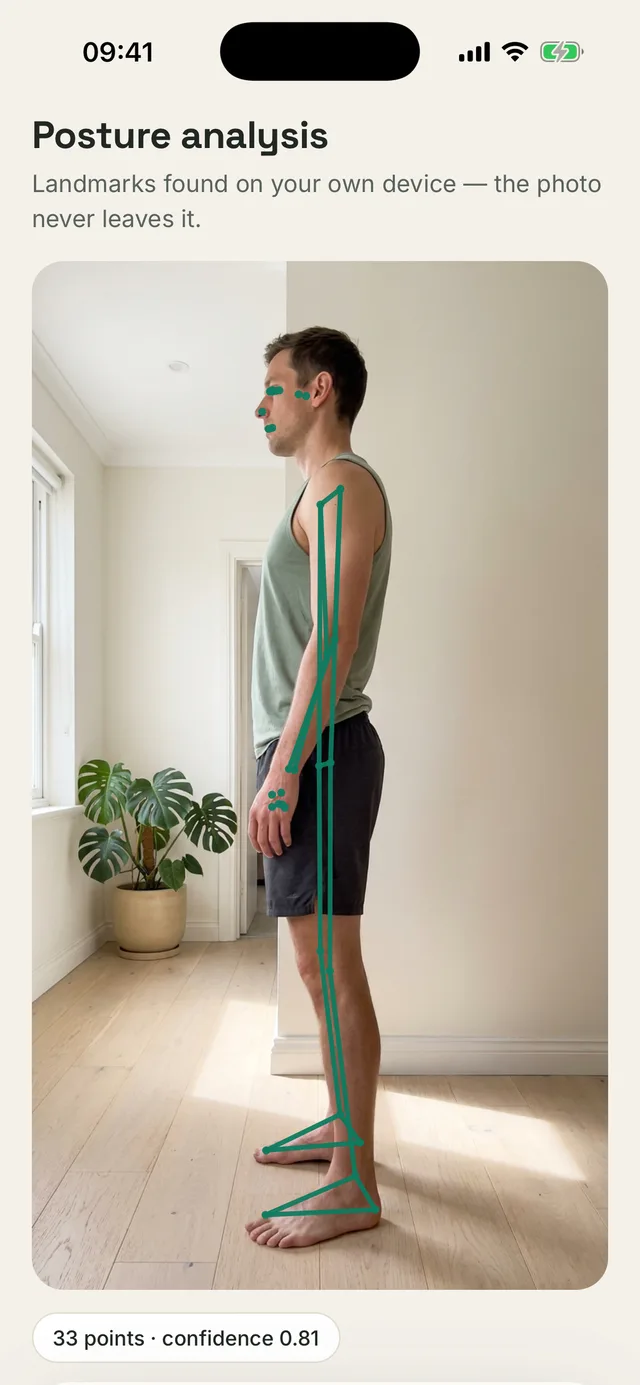
Kallen app screen: a side-on photo with 33 pose landmarks drawn over it and a confidence reading

Posture analysis · side