01
How can I work out at home which side of my body is tighter?
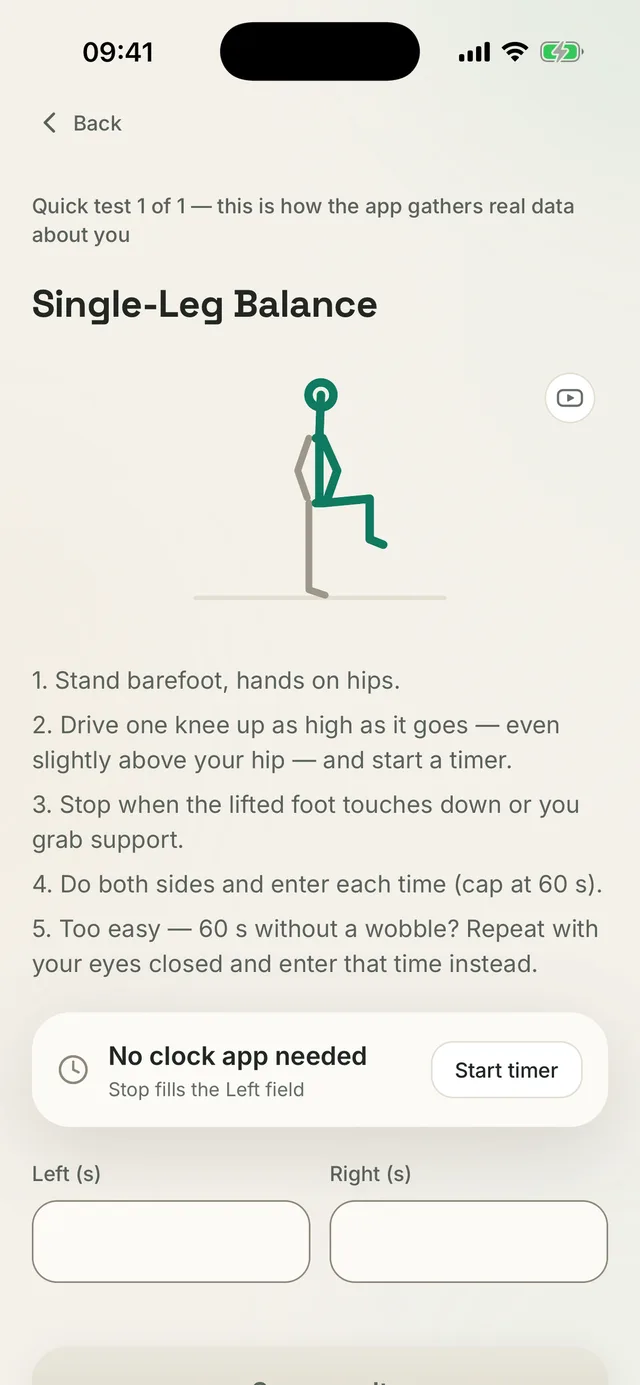
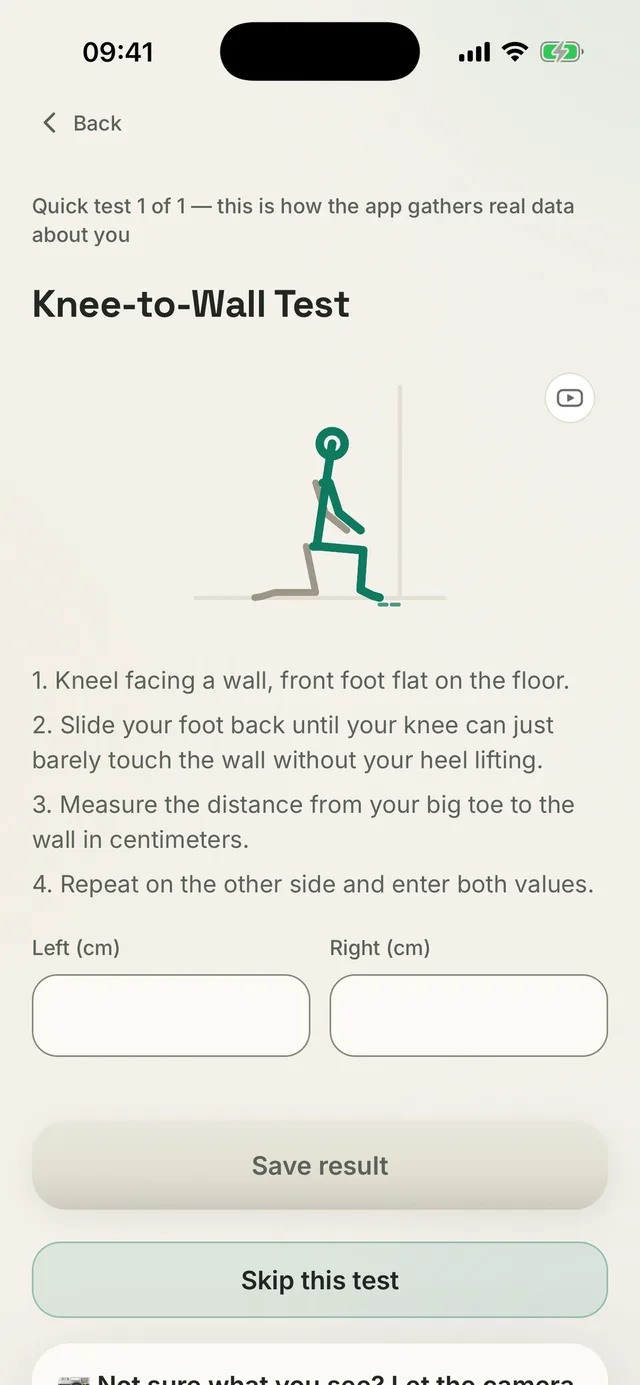
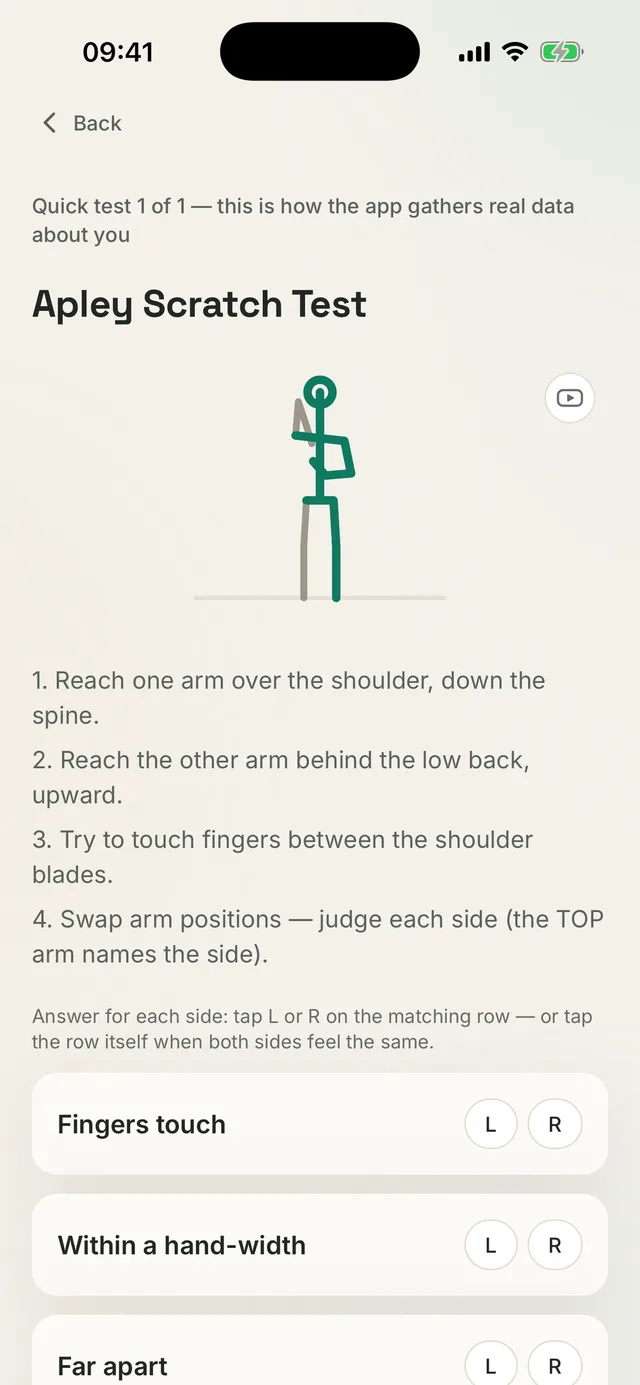
Measure range on both sides and write the result down. Start with three tests: knee-to-wall in centimeters, single-leg balance in seconds and a behind-the-back reach. Kallen records each of its 34 tests for the left and right separately, so you can see the comparison immediately. Use the same setup each time, because comparability matters more here than perfect precision.
02
How much of a left-to-right difference is still normal?
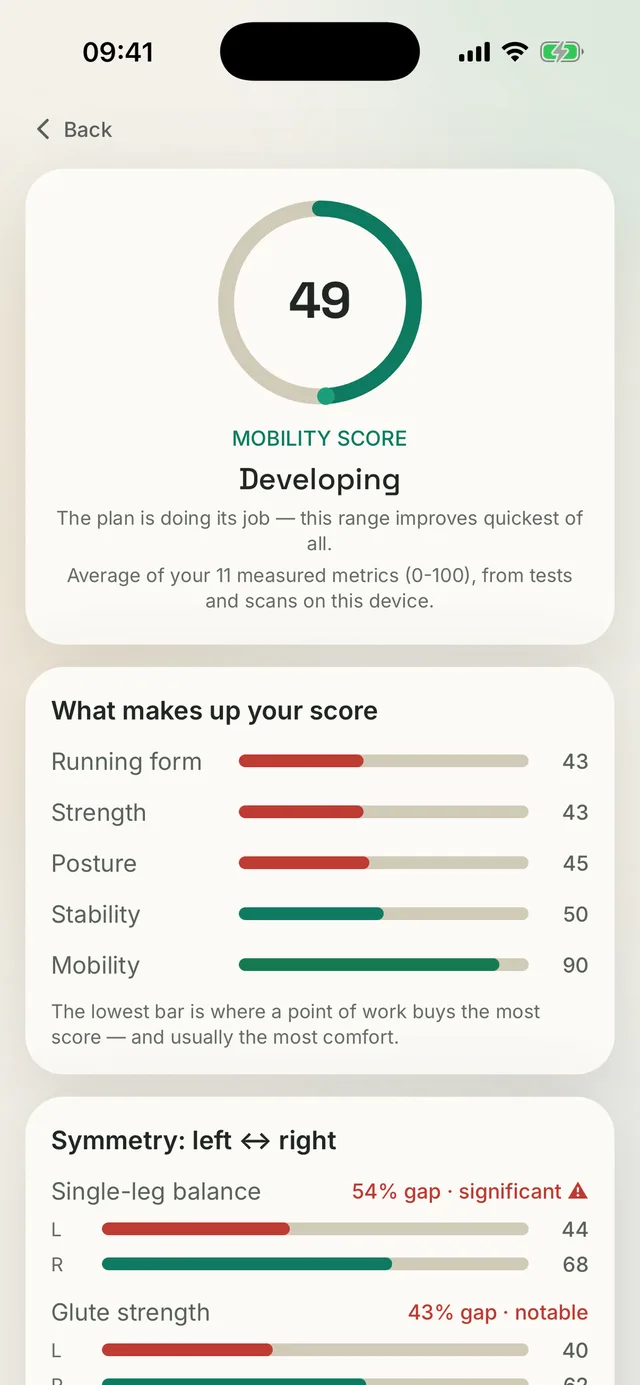
There is no single number across tests, because seconds and degrees are not comparable. Kallen judges each gap against the norm for that specific measurement and puts it in words: symmetric, notable or significant. The raw centimeters or degrees say little without that reference.
03
Do I need to correct a body asymmetry if nothing hurts?
Usually not. Asymmetry is normal, and many people have it without symptoms. It deserves attention when it is large, repeatable, connected to symptoms or limiting a movement you care about. The result can guide your starting point, and repeating the test a few weeks later shows whether anything changed.