Kallen
Download

Guides

How to reduce anterior pelvic tilt on your own

A pelvis tipped forward deepens the curve in your lower back: the belly pushes out even on a lean frame, and after a while on your feet the lower back may start to ache or pull. The position itself is not a disease. It becomes a problem when your hip flexors stay short while your glutes and deep abdominals stop working.

What it usually looks like

The pelvis tips forward so the lower back over-arches and the belly appears pushed out even in fit people; often spotted in photos or a posture scan rather than felt. Long sitting plus quad/hip-flexor dominance is the classic recipe; sometimes paired with a grumbling lower back after standing.

Why it happens

Sitting keeps the hip flexors short and the glutes off duty; standing up, the short flexors pull the pelvis forward and the sleepy glutes and deep core don’t counter it. The lower back arches to compensate and quietly absorbs load all day. It’s a tug-of-war the front is winning; the fix is lengthening the front while strengthening the back of the rope.

Specifics

Clear answers and practical doses

Find specific answers about setup, dosage and timing, with the same numbers shown in the plan further down the page.

01

What should I do about anterior pelvic tilt if stretching my hip flexors isn’t helping?

Strengthen the muscles behind the pelvis. The 3 × 40-second stretch per side is only the protocol’s first phase; the second, 3–5 weeks long, is glute bridges with a deliberate 2-second squeeze at the top and slow dead bugs with the lower back glued to the floor, 3 times a week. The protocol pairs the two because the front and back of the pelvis work together.
02

How long does it take to correct anterior pelvic tilt when you sit most of the day?

Your sense of position changes in 2–3 weeks; a visible change on photos usually takes 8–12 weeks of consistent work. The single biggest lever on hip-flexor length is interrupting sitting every 30–45 minutes. Kallen handles that with Reverse Sitting, handing you one Mobility Snack at the end of each work block.

03

How often should I check anterior pelvic tilt progress without losing motivation?

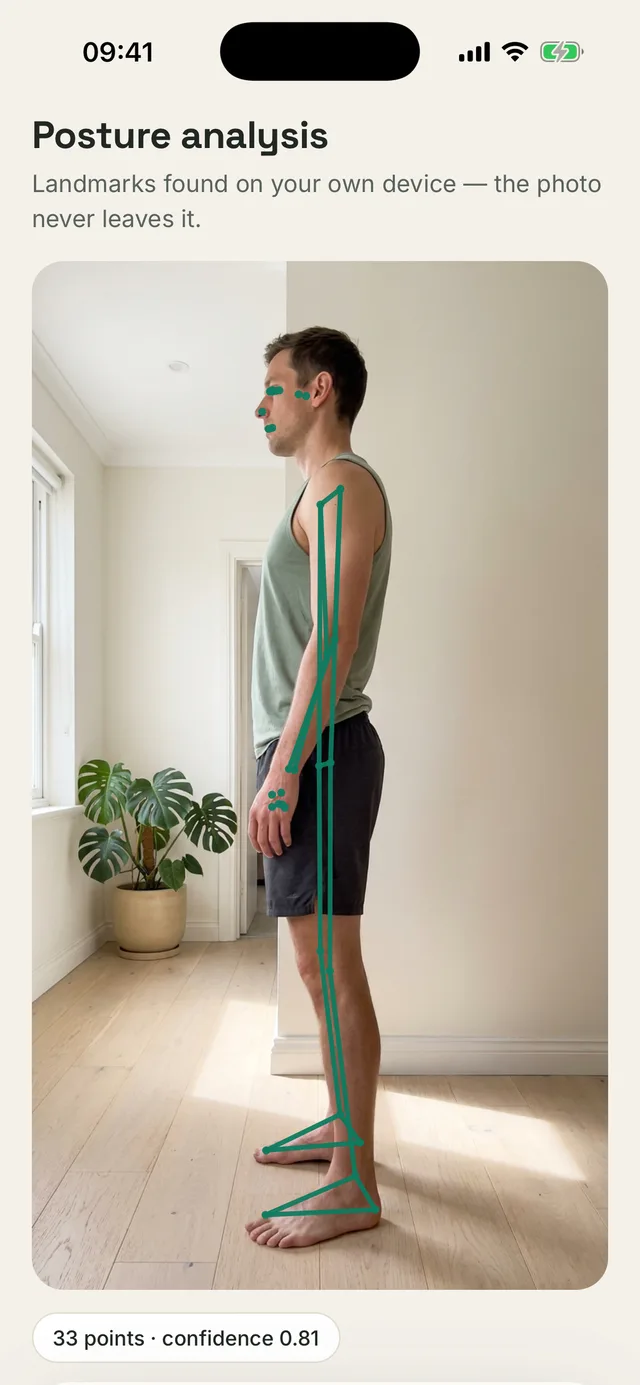
Monthly, not daily. Posture change is honest but slow, so a daily mirror check mostly shows nothing moving. The protocol recommends filming or scanning once a month; Kallen’s side-on posture scan reads anterior pelvic tilt, so you compare two readings taken the same way.

When to see a professional

  • Back pain with numbness, night pain or leg weakness; that is a pain problem first: professional assessment, and see low_back_pain red flags.
  • A tilt that appeared SUDDENLY or keeps visibly progressing; get it assessed.

These signs do not mean you must stop moving. Have them assessed in person and continue only with movement that is safe for you.

What you can do from today

  • Interrupt sitting every 30-45 min; the single biggest lever on hip-flexor length.
  • Learn the "ribs down, tail tucked" cue and visit it a few times a day (standing at the desk, waiting for coffee).
  • Film or scan monthly rather than mirror-checking daily; posture change is honest but slow.

In Kallen: turn on Reverse Sitting

Start a 25, 45 or 60-minute work block and let Kallen track the time. When it ends, Kallen draws one of 19 Mobility Snacks matched to the tight areas in your profile. Each takes 35–50 seconds; 10 can be done seated and the rest standing beside your desk. Then you return to work.

Your plan, phase by phase

This is how the protocol appears in the app. The coach adapts the pace and dosage to your measurements. You advance when you meet the phase criterion, not when a date arrives.

Phase 1 · 2-3 weeks

Lengthen the front

Goal

Restore hip-flexor length and learn the neutral-pelvis position

Dosage

Stretch 3x40s per side daily with the back-pocket glute squeezed; 90/90 breathing 5 min; exhale fully, feel the ribs drop.

Move on when

You can find and hold neutral pelvis on cue; the hip front stops feeling like a guy-wire.

Exercises

Half-Kneeling Hip Flexor Stretch90/90 BreathingHip CARs

Phase 2 · 3-5 weeks

Strengthen the back of the rope

Goal

Glutes and deep core that actually hold the pelvis level

Dosage

Bridges with a deliberate 2s glute squeeze at the top; dead bugs slow with the low back glued down. 3x/week.

Move on when

Glutes fire before the lower back in bridges; hollow hold 30s+ with ribs down.

Exercises

Glute BridgeDead BugHollow Body HoldCouch Stretch

Phase 3 · 3-6 weeks

Own it under load

Goal

Keep the neutral pelvis in real movement; hinging, carrying, striding

Dosage

Hinge with the "ribs over pelvis" cue; Pallof slow, 2x10 per side, 2-3x/week.

Move on when

A posture scan or side photo shows the change; standing tall feels like rest, not work.

Exercises

Hip Hinge PatternPallof PressSingle-Leg Romanian Deadlift

How long it takes

Position sense changes in 2-3 weeks; visible posture change on photos usually takes 8-12 weeks of consistent work. This one rewards patience and monthly (not daily) progress checks.

Common questions

How do I measure anterior pelvic tilt at home?

Put your hands on your pelvis: thumbs on the bony points at the front, fingers over the pubic bone. If your hands clearly angle down and forward, your pelvis is tipped forward. A second signal: lying on your back, a whole hand sliding freely under your lower back is a lot of space.

Is anterior pelvic tilt dangerous?

Not in itself. Plenty of people carry this position with no symptoms at all, and it does not need “fixing” for looks. It is worth working on when symptoms come with it: a pulling lower back, tight hip flexors, glutes that have gone quiet.

Will crunches fix it?

No. Crunches mostly train trunk flexion, and this is a different job: lengthening the hip flexors, waking the glutes, and teaching your trunk to hold position without arching. Anti-extension work such as planks and dead bugs does far more here.

Check your own results

Measure your range of motion in Kallen, build your Movement Profile and follow the plan step by step.

Download Kallen
Kallen app screen: a side-on photo with 33 pose landmarks drawn over it and a confidence reading

Posture analysis · side