Kallen
Download

Guides

How to get rid of heel pain at home

The first steps out of bed feel like stepping on a stone, the pain fades as you walk around, and it is back after a long stand or the next morning. That pattern is the plantar fascia, the bowstring under your arch, and it responds better to the right load than to rest.

What it usually looks like

Sharp or bruise-like pain under the heel (sometimes into the arch) with the FIRST steps in the morning or after sitting; typically eases as you get moving, then returns after long standing or the next morning. Common after mileage jumps, flat unsupportive shoes, or lots of standing.

Why it happens

The plantar fascia is the bowstring of the arch; it stores and returns energy every step. Tight calves, weak foot muscles and load spikes concentrate stress at its heel attachment; overnight it stiffens in a shortened position, then the first steps jolt the irritation awake; hence the morning signature.

Specifics

Clear answers and practical doses

Find specific answers about setup, dosage and timing, with the same numbers shown in the plan further down the page.

01

What should I do before the first steps in the morning when my heel hurts?

Spend 60 seconds on ankle circles and calf pumps while you are still in bed, then roll the sole of your foot on a ball before you stand up. Overnight the fascia stiffens in a shortened position, so the first steps jolt it; warming it up first breaks that daily loop. In the protocol’s first phase you roll 2–3 times a day for 1–2 minutes and stretch the calf 3 × 40 seconds daily.

02

Which exercise loads the plantar fascia directly, and how often should I do it?

Calf raises with your toes resting on a rolled towel. Lifting the toes winds the fascia tight, so every rep loads it directly. The protocol uses a slow three-second tempo, 3 sets of 10–12, every other day, during the 4–6 weeks of its second phase, plus small daily doses of foot drills. Load, not rest, is what makes the fascia stronger.

03

How long does plantar fasciitis take to go away with home exercise?

Most cases turn the corner in 4–8 weeks and settle within 3–4 months. The first-steps routine does a disproportionate share of the work, because it breaks the nightly reset. Runners come back gradually: volume up by 10–15% a week, on flat ground first. Numbness, tingling or burning in the sole is a different pattern: see the warning signs on this page.

When to see a professional

  • Numbness, tingling or burning rather than mechanical pain; nerve assessment.
  • Night pain or swelling without a load story; get it checked.
  • After an acute "pop" during sport with bruising; assessment (fascia tears are managed differently).

These signs do not mean you must stop moving. Have them assessed in person and continue only with movement that is safe for you.

What you can do from today

  • Before the first steps: 60s of ankle circles and calf pumps in bed, roll the sole on a ball before standing.
  • Supportive shoes even at home for now; barefoot-on-tiles mornings are the enemy of this month.
  • Standing-heavy days: alternate surfaces, sneak in sitting breaks, roll the sole midday.

In Kallen: turn on Reverse Sitting

Start a 25, 45 or 60-minute work block and let Kallen track the time. When it ends, Kallen draws one of 19 Mobility Snacks matched to the tight areas in your profile. Each takes 35–50 seconds; 10 can be done seated and the rest standing beside your desk. Then you return to work.

Your plan, phase by phase

This is how the protocol appears in the app. The coach adapts the pace and dosage to your measurements. You advance when you meet the phase criterion, not when a date arrives.

Phase 1 · 1-3 weeks

Calm the mornings

Goal

Reduce the daily re-irritation cycle

Dosage

Roll 2-3x/day 1-2 min (esp. before first steps); calf stretch 3x40s daily.

Move on when

Morning pain drops from sharp to dull and fades within minutes.

Exercises

Plantar Fascia Ball RollWall Calf StretchBig Toe MobilizationAnkle Rocks

Phase 2 · 4-6 weeks

Load the arch

Goal

Strengthen the fascia and its muscular teammates; load is the medicine

Dosage

Calf raises with toes elevated on a rolled towel (loads the fascia directly): slow 3s tempo, 3x10-12 every other day. Foot drills daily, small doses.

Move on when

Full daily standing/walking comfortable; morning signature nearly gone.

Exercises

Deficit Calf RaiseShort Foot DrillTowel ScrunchesToe Spread & Grip

Phase 3 · 3-5 weeks

Spring + return

Goal

Elastic loading and full running/standing tolerance

Dosage

Balance and toe/heel walks harden the arch daily. Runners: volume +10-15%/week on the flat first, and your coach reintroduces springy work (small hops, strides) once mornings are silent.

Move on when

Two weeks of normal running/standing with silent mornings.

Exercises

Single-Leg StandToe WalksHeel WalksEyes-Closed Balance

How long it takes

Stubborn but beatable: most cases turn the corner in 4-8 weeks and resolve by 3-4 months. The morning-first-steps ritual is disproportionately powerful; it breaks the nightly reset loop.

Common questions

Is plantar fasciitis the same as a heel spur?

Not quite. A heel spur is a bony outgrowth that shows up on an X-ray, and many people have one without any pain. The pain people call a heel spur is usually the plantar fascia where it attaches to the heel, and that is what this plan works on.

Should I walk barefoot with plantar fasciitis?

Not for now. The protocol recommends supportive shoes even at home while the heel is irritable; barefoot mornings on hard floors keep the cycle going. Once the mornings are quiet, the strengthening phase builds the foot back up.

Does stretching the calf help heel pain?

Yes, as a start. Tight calves concentrate stress where the fascia attaches to the heel, which is why the first phase pairs a calf stretch with rolling the sole. On its own it is not enough: the second phase adds load, because a fascia that gets stronger stops getting irritated.

Check your own results

Measure your range of motion in Kallen, build your Movement Profile and follow the plan step by step.

Download Kallen
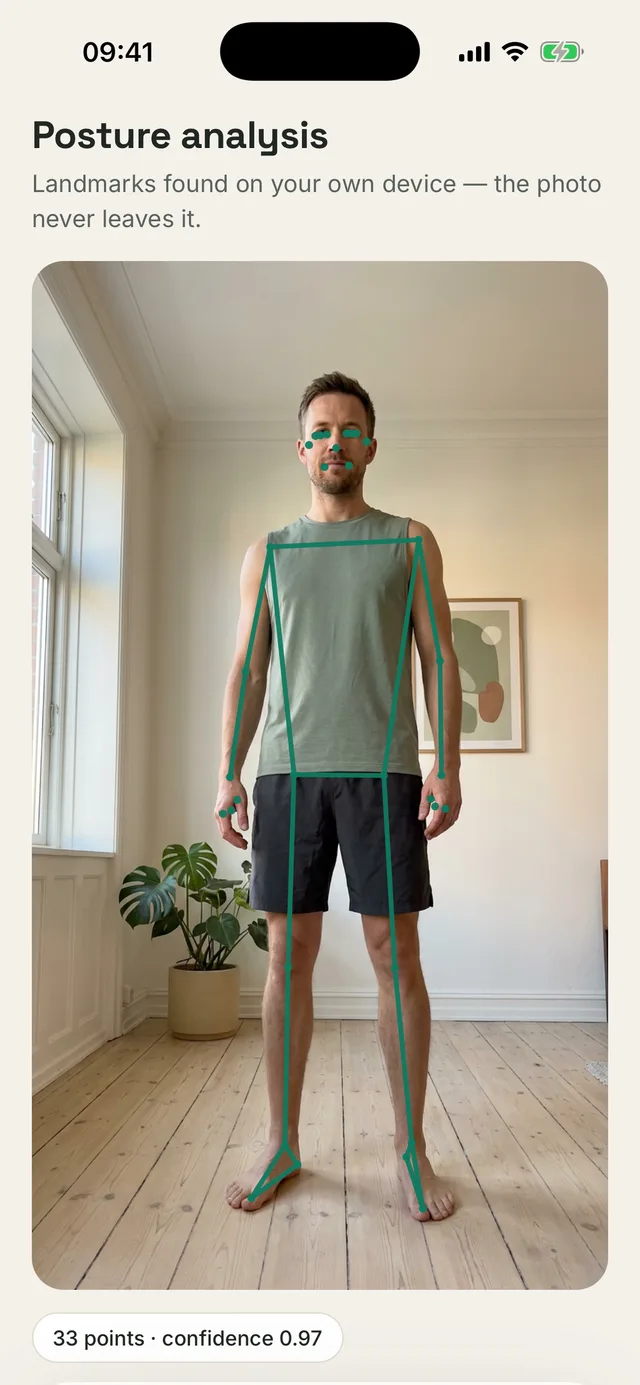
Kallen app screen: a front-on photo with 33 pose landmarks drawn over it

Posture analysis · front